
.webp?ssl=1 "What Could AI Agents Mean for Modern Software Companies")
Software companies are facing a significant inflection point driven by the emergence of AI agents software. These sophisticated programs move beyond simple automation, performing complex, multi-step tasks autonomously. They analyze situations, make decisions, and execute actions, often without continuous human oversight. This shift presents both profound opportunities and pressing challenges for how software is developed, delivered, and maintained in a competitive market. Businesses must adapt rapidly to remain relevant.
Overview
- AI agents software represents a paradigm shift from traditional software, operating autonomously and making decisions.
- Modern software companies must adapt their core strategies, moving from tool provision to system orchestration.
- Operational processes, from testing to deployment, will be significantly reshaped by agent-driven automation.
- Integrating AI agents software requires robust security protocols, data governance frameworks, and ethical guidelines.
- The workforce needs reskilling in areas like AI oversight, prompt engineering, and agent management rather than manual execution.
- Companies that proactively adopt and AI agents software could gain a substantial competitive edge in the market.
- Strategic investment in talent, infrastructure, and an agent-first mindset is crucial for future success.
The Evolving Landscape of AI agents software
The software industry stands at a pivotal moment. We’ve seen cycles of innovation, from client-server to cloud computing, but AI agents software introduces a new layer of autonomy. Unlike conventional applications that follow explicit instructions, agents define their own sub-goals to achieve a larger objective. This capability radically alters how we conceive of software. From a practical standpoint, this means less human intervention in routine, and even some non-routine, tasks.
Consider a development pipeline: an agent could monitor code repositories, identify potential bugs, suggest fixes, and even initiate pull requests. This isn’t just automation; it’s proactive problem-solving. Companies accustomed to building static tools must now think about designing systems that learn, adapt, and operate with a degree of self-direction. This requires a different architectural approach, focusing on modularity, robust APIs, and clear safety protocols. Our experience shows that early adopters are already exploring these frontiers, understanding that inaction is a greater risk than early experimentation.
Operational Impact and AI agents software Integration
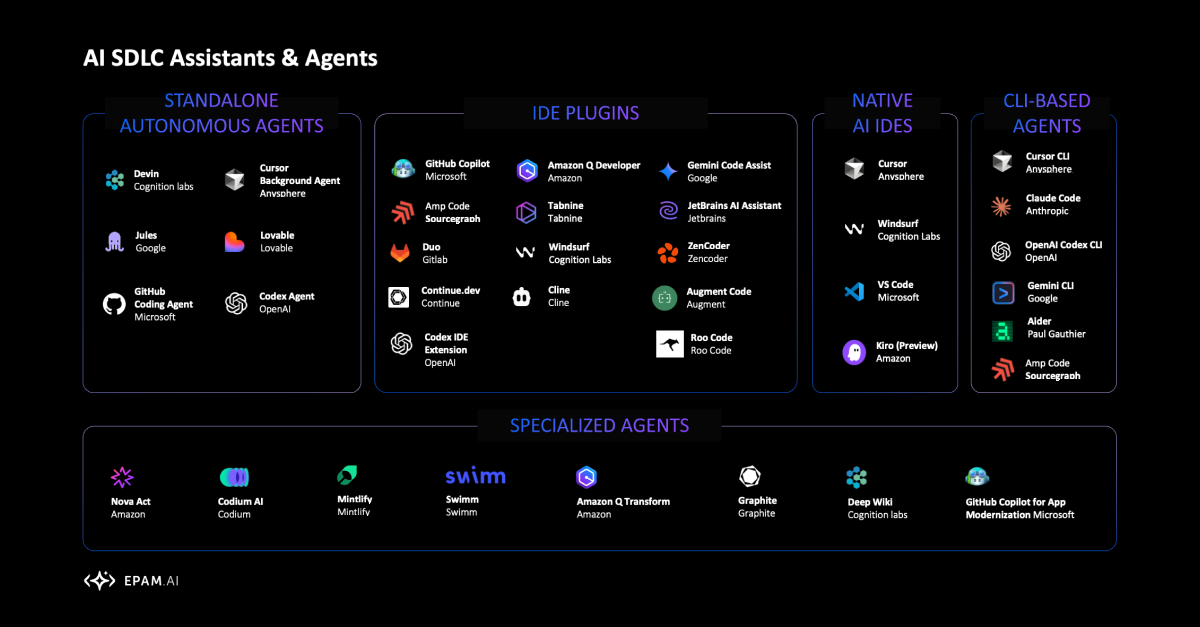
Integrating AI agents software into existing operations presents both immense opportunities and complex hurdles. For most software companies, the immediate impact will be on efficiency. Agents can automate repetitive, time-consuming tasks across the entire software development lifecycle (SDLC). This includes automated testing, intelligent code generation, security vulnerability scanning, and even customer support interactions. I’ve personally observed teams shift their focus from manual repetitive checks to overseeing the agent’s performance and refining its objectives.
However, true integration goes beyond simple task offloading. It means re-architecting workflows to account for autonomous decision-making. Data security and compliance become even more critical when agents access and process sensitive information. Ensuring these agents operate within defined ethical boundaries, especially in sectors like healthcare or finance, is paramount. From our perspective, successful integration requires a phased approach, starting with low-risk internal processes before scaling to client-facing or mission-critical systems. Companies must establish clear accountability frameworks for agent actions, a challenge many traditional software firms are just beginning to grapple with.
Workforce Adaptation and Skill Shifts
The rise of AI agents will inevitably reshape the roles within software companies. This is not about wholesale replacement, but rather a significant redefinition of human tasks. Developers will spend less time on boilerplate code and more on designing sophisticated agent architectures, setting objectives, and validating outcomes. Quality assurance professionals might transition from manual testing to building robust evaluation frameworks for agent performance. Project managers will need to understand how to orchestrate teams that include both human and AI workers.
From experience in the US market, companies are already initiating retraining programs. The demand for prompt engineers, AI ethicists, and agent trainers is increasing. Software companies must invest in continuous learning for their employees. This commitment to upskilling ensures that human talent remains central to innovation, working synergistically with agents rather than being overshadowed by them. The focus moves from “doing the work” to “directing the work” and “making the agents better at the work.” This shift requires a proactive HR strategy and a culture that embraces continuous technological evolution.
Strategic Considerations for Adopting AI agents software
For software companies, the strategic adoption of AI agents software is no longer optional; it’s a competitive imperative. The core question is not if, but how and when to invest. This involves more than just selecting a vendor or building internal capabilities; it requires a fundamental re-evaluation of the business model. Are we building tools for humans, or are we building intelligent systems that can operate independently and serve other agents? The answer impacts product design, revenue streams, and market positioning.
Companies should prioritize areas where agents can deliver the most immediate and measurable value. This might be in internal R&D, streamlining customer support, or accelerating product deployment. Furthermore, establishing clear governance policies for agent behavior, data usage, and error handling is critical. Without robust frameworks, the risks of unintended consequences or security breaches can outweigh the benefits. Strategic foresight demands not just technical proficiency but also an acute awareness of the ethical, legal, and societal implications of deploying autonomous AI agents software.